Field study / 01
Frontline Worker Monitoring
Testing connected safety equipment where the work is hardest: at height, in the dark, and far from the control room.
Location
Adani Transmissions Limited, Gujarat
Focus
Safety, communication and field visibility
The challenge
Visibility should travel with the worker.
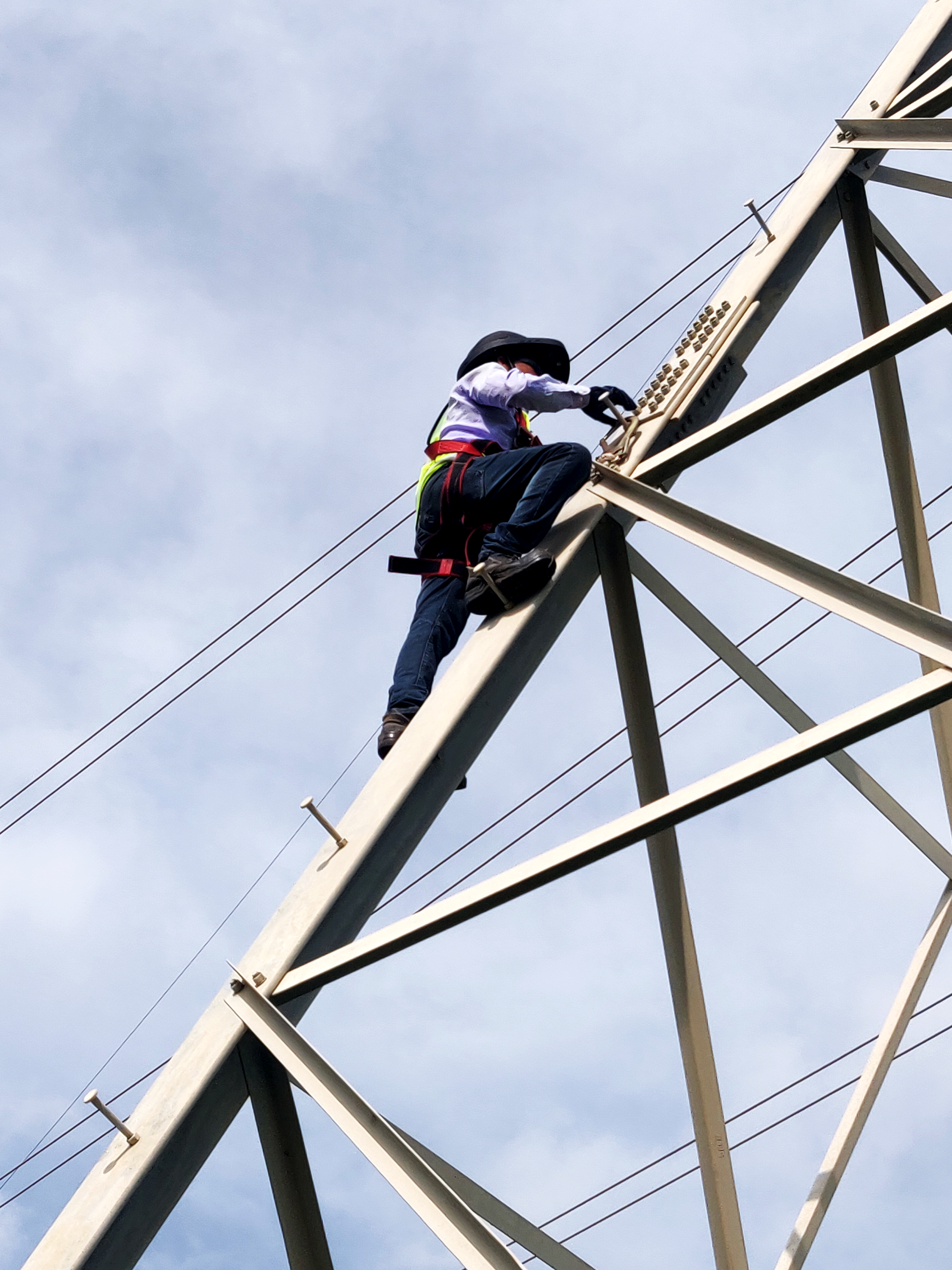
The objective of the field test was to assess the performance and usability of our device prototypes in real-world work environments. Specifically, we aimed to evaluate their effectiveness in tasks such as pole climbing, heavy lifting, lone worker assignments, work in poorly lit areas, heavy tool handling, inspections, and collaboration with remote control centers.
01 / Objective
The objective of the field test was to assess the performance and usability of our device prototypes in real-world work environments. Specifically, we aimed to evaluate their effectiveness in tasks such as pole climbing, heavy lifting, lone worker assignments, work in poorly lit areas, heavy tool handling, inspections, and collaboration with remote control centers.
02 / Methodology
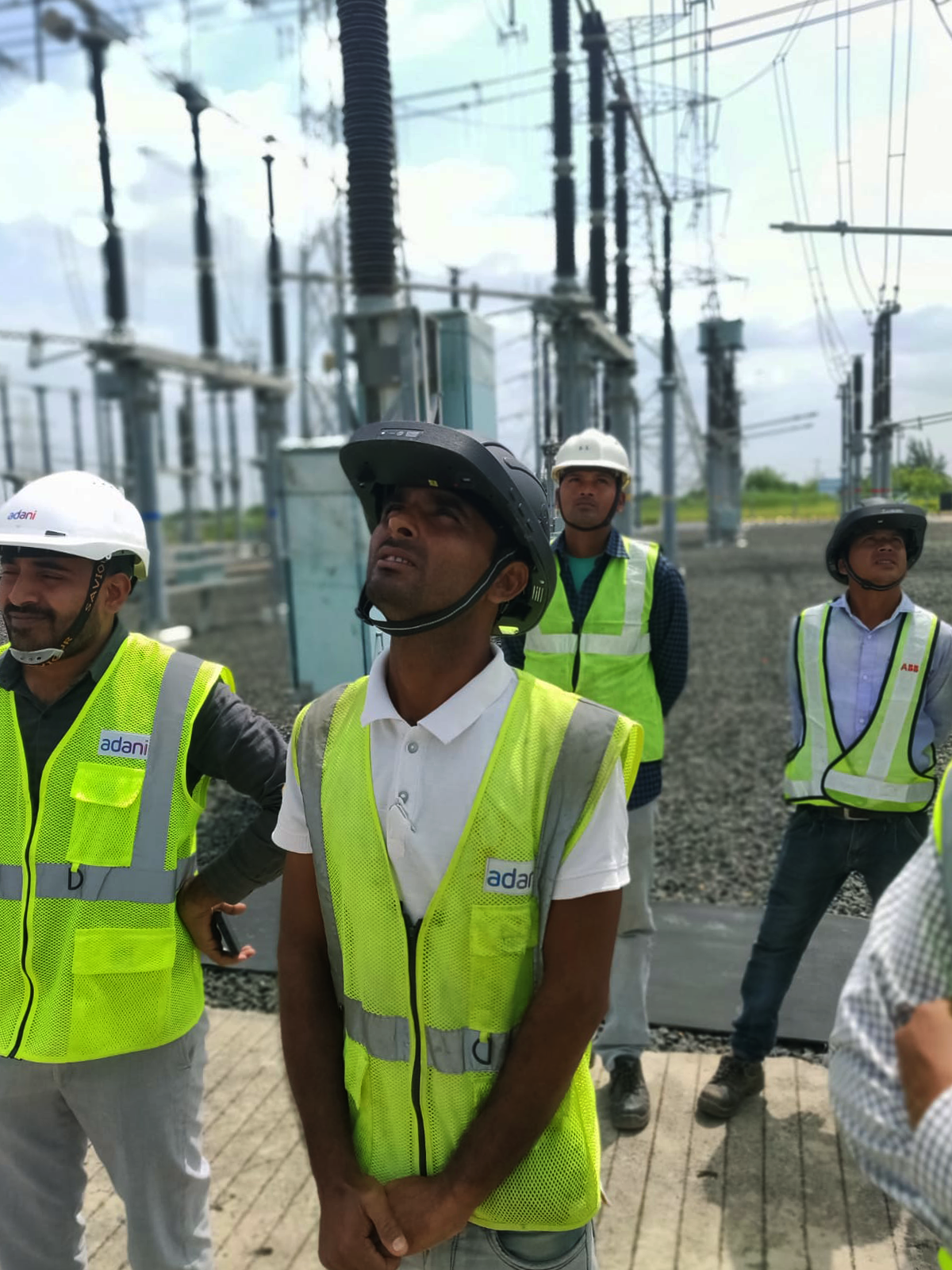
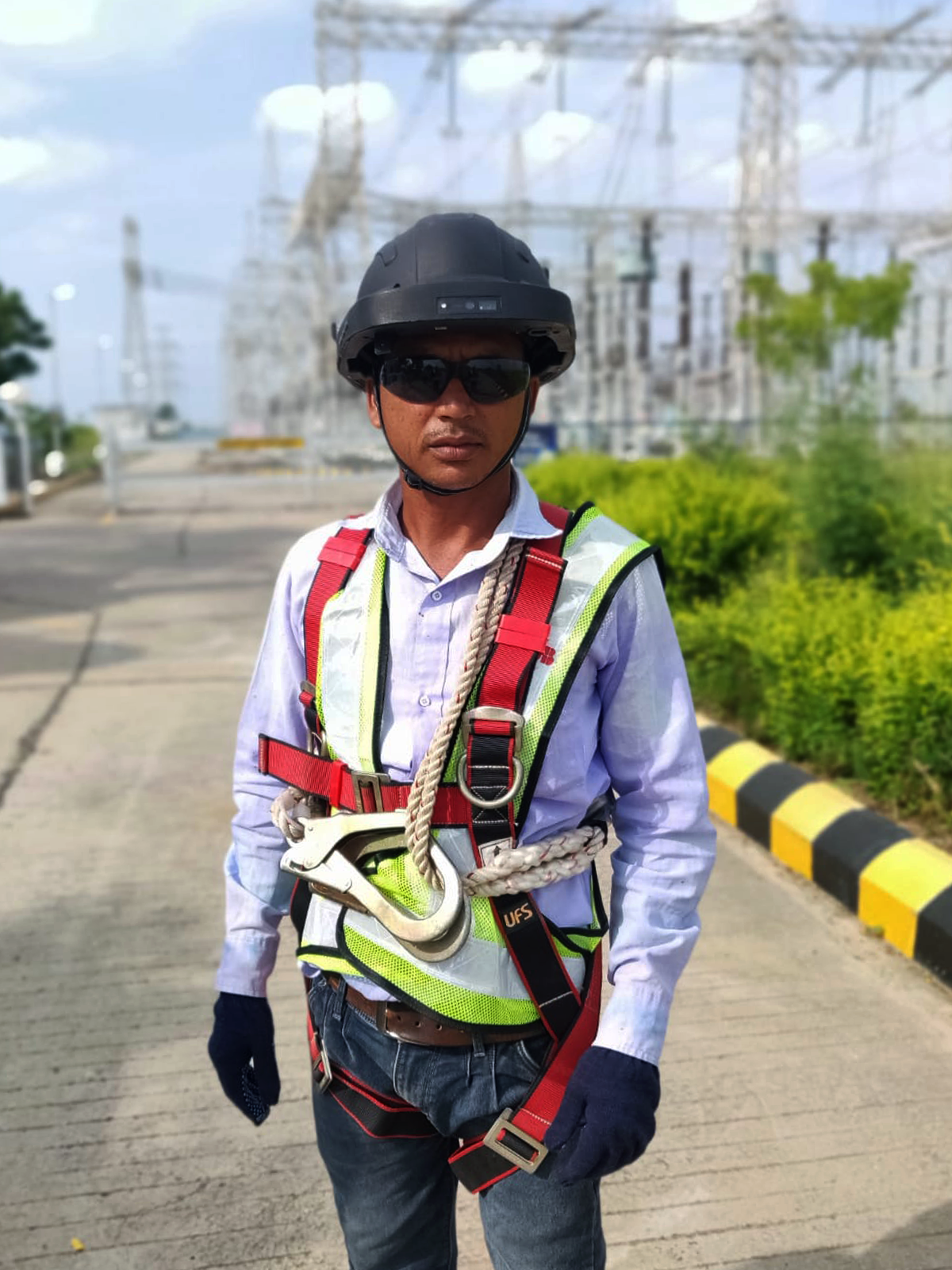
Five prototypes were assigned to workers representing various industries and job roles. These workers were instructed to utilize the devices during their regular work tasks and provide feedback on their experience. The field test spanned a defined period, during which data on device usage, performance, and user feedback were collected and analyzed.
03 / Result
The field test yielded highly positive results, with all users reporting that our device prototypes were a significant improvement over the basic helmets currently in use. The most notable feature praised by the workers was the ability to conduct remote inspections through the helmet camera and video calling functionality. This capability proved invaluable in scenarios where physical presence was challenging or hazardous. The inbuilt LEDs provided substantial assistance in poorly lit areas, improving visibility and ensuring safer working conditions. Users particularly appreciated the convenience and effectiveness of the location monitoring feature, which aided lone workers and allowed for timely response in case of emergencies. The ability to monitor body vitals was also highly regarded, as it enabled workers to track their health conditions and take proactive measures to avoid risks. Additionally, the device's durability and robustness were highlighted as key strengths, as they successfully withstood demanding tasks such as pole climbing and heavy tool handling. The seamless collaboration with remote control centers further enhanced communication and productivity, enabling real-time guidance and assistance.
From a field test to a safer shift.
The trial showed how real-time guidance and assistance can improve both safety and productivity. Workers could communicate with remote teams, respond to hazards sooner and work with more confidence in demanding environments.